
GIRO 2024: A Reflection
 As an actuary who has bounced from specialism to specialism and qualified via a mixture of life and investments exams, I have to admit I was initially a little intimidated by attending a GI conference – would there be enough for me to sink my teeth into, or would I be out of my depth and floundering as acronyms whizzed over my head?
Comfortingly, these fears ended up being ill-founded. Workshops were pitched at differing levels and across a variety of subjects, and the IFoA’s schedule helpfully indicated the target audience and assumed knowledge level for each session. Indeed, one of the joys of a conference structured like GIRO is that you’re able to tailor your selection of workshops to match your appetite, whether that’s delving deeper into existing interests (for me, anything tech-related is a win) or dipping your toe into the unknown.
In addition to workshops, there were (of course) several other components of the GIRO schedule. One of these was plenaries, larger talks by featured speakers:
- The economic journalist and author Hamish McRae gave the opening plenary on what we might expect in 2050 – a timespan we actuaries often balk to think about! – based on various forces of change. This engaging talk was exactly what I needed to shake off the cobwebs after my train ride up from London!
- The second plenary on professionalism was an entertaining take-off on trashy tabloid talk shows, with audience members encouraged to weigh in on a case of a poorly handled work hand-over.
- Economist David Muir’s plenary gave a view on the global and UK economic outlook in 2024, with a particular focus on the recent US and UK elections. The close focus on recent events and policy provided an interesting contrast with the lengthier timescales explored in the first plenary.
- The fourth and final plenary by Helen Sharman CMG OBE (the first Briton in space) was both out of this world and down to earth, with universally relevant lessons about teamwork, trust, and transparency. (I’m not sure whether I was more impressed by the space travel or by the contribution to the Mars Bar Ice Cream).
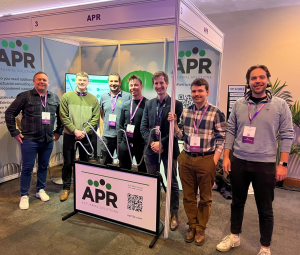
At various points between sessions, delegates were also invited to the main hall to explore stalls from exhibitors, get food and drink, and network. As a Diamond sponsor, APR were in pride-of-place by the entry doors with our nerve-wracking buzzer game (and our less flashy, but no less exciting, prediction contest). Swag (notebooks, totes, stress balls…) was in plentiful supply – my particular highlight was a charming pair of patterned socks. On the second night, there was also a formal dinner including a performance by Take That tribute band Rule the World.
Enough build-up – let’s unpack some of the themes. (Of course, the upshot of such a smorgasbord of workshop choice is that any holistic summary of ‘themes’ I try to construct in this article is likely to be informed by the course-load I selected – so be ready to take these with a pinch of salt).
Climate and Sustainability
The common theme for ‘Hot Topics’ at this year’s GIRO was climate and sustainability, undoubtedly one of the most important subjects to which we can turn our attention. Notwithstanding the larger existential threat, these issues impact all areas of the risk landscape (whether that be via climate change litigation, increased frequency and severity of natural disasters, or the economic impact of managing transition risk), and we need to break out every tool in our actuarial toolkits to accurately tackle them – as was explored in these sessions.
A particular call-out for Climate Scorpion – the sting is in the tail[1]; the eponymous paper is the third in a series where the IFoA collaborates with climate scientists on the topic of global warming and explains how ‘tipping points’ and a revised analysis of sensitivity mean that going beyond a 1.5C warming target is both more likely AND riskier than we had anticipated.
Techniques for Getting Technical
Everybody wants to be on the cutting edge, and so naturally one of the themes common to many of the workshops was how to achieve this – how to get the most out of your data, specific modelling/statistical techniques/technology that you could use, or (at a higher level) how to plan, resource and execute a successful transformation project. A whistlestop tour through some talks I particularly enjoyed on the technical topic:
- Building systems that fast [2]– a practical guide to writing blazingly fast more performant code, including both principles to live by and some great examples. There were some SQL tips in here (indexes, anyone?) that I will undoubtedly be preaching to others about. (I was inordinately pleased here that I successfully answered a question about hash maps!)
- Hush hush: Keeping neural network claims modelling private when distributed and shared between different insurers using federated learning [3] – essentially, this was about a clever method through which multiple insurers could work together on training a model while keeping confidential data confidential. Not yet in real-world use – though with a talk as convincing as this one was, it’s surely only a matter of time!
- Transforming technical pricing with limited data – secrets to successful predictive modelling [4] – how do you train a statistical model with scarce data? Bodge it with a workaround? Well, according to this technical ‘light-dive’, perhaps you should consider Bayesian credibility techniques: for example, you can ‘modify’ a traditional GLM to balance the objectives of fitting to data against matching some prior distribution.
How to Win Friends and Influence People
We shouldn’t be swept away by the allure of the technical and forget how important communication and relationship-building can be – as many workshops were keen to remind us. I was shocked by the revelation in hyperexponential’s The current state of pricing [5] that when ranking collaboration between teams, underwriters on average ranked the relationship between underwriters and pricing actuaries the lowest! Similarly, both presenter and audience consensus on Pricing and underwriting transformation – how to do it well [6]noted that getting engagement and support from all areas of the business at an early stage in a transformation was key to ensuring success. Elsewhere, talks on emotional intelligence (Decisive mindset: enhancing intuition and emotional intelligence for swift decision-making in the insurance industry [7]) and leadership (Influencing the future: empowering actuaries to lead with confidence [8]) reminded us of the role that softer skills play in making a well-rounded actuarial skillset, especially for those with an eye on leadership.
To Conclude
GIRO 2024 left us with a wealth of insights and experiences. From the pressing issues of climate change to the latest in technical advancements, this year’s conference highlighted the dynamic challenges and opportunities within the general insurance sector. Additionally, the conference also brought key lessons of self-restraint, as I managed to limit myself at one pair of socks and allowed for the joy of this merchandise to be spread across all attendees – unlike John and his mousse cups (check out our Life Conference 2024 round-up article if you are interested in finding out more).
Whether you attended for the cutting-edge tech workshops, networking opportunities, competitions, or just the free swag, there was something for everyone at GIRO 2024.
[1] climate-scorpion.pdf March 2024
[2] Thomas Hamilton, L DATA.
[3] Dylan Liew, BUPA; Malgorzata Smietanka, UCL; Michelle Chen, AIG.
[4] Jake Morris, Allianz Commercial; Jamie Wilson, hyperexponential.
[5] Tom Chamberlain and Jamie Wilson, hyperexponential
[6] Shyam Bhayani, Aviva; Tom Chamberlain and Kamlesh Walia, hyperexponential; Alice Boreman EY.
[7] Caroline Maguire, Caroline Maguire Coaching.
[8] Wendy Kriz Evans, LCP; Karen Dayal, Aviva.
Jacob Warbrick
December 2024
